
HUDCO 8.76% Tax Free Bonds Issue – September 2013
This post is written by Shiv Kukreja, who is a Certified Financial Planner and runs a financial planning firm, Ojas Capital in Delhi/NCR. He can be reached at [email protected]
After a reasonably good response to the REC tax-free bonds, the next eligible company to come up with such an issue is Housing and Urban Development Corporation Limited (HUDCO). The company will be launching its issue from the coming Tuesday, September 17.
The rates the company is going to offer in this issue are higher than the rates offered by REC in its issue, which is still open and getting closed on September 16. There are two reasons for it, firstly, HUDCO issue is ‘AA+’ rated and that is why it can offer rates 10 basis points (or 0.10%) higher than any ‘AAA’ rated issuer. Secondly, the average G-Sec rates have been ranging higher in the past 10-20 days than they were earlier when REC came up with its issue.
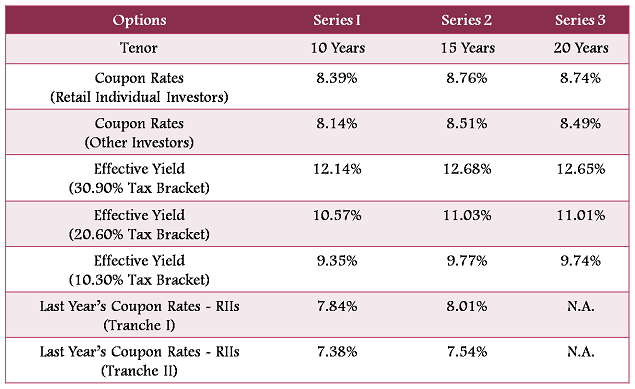
As compared to REC’s 8.26% (10Y), 8.71% (15Y) and 8.62% (20Y), HUDCO is offering 8.39%, 8.76% and 8.74% rate of interest for the respective tenors.
Though the interest will be paid annually, I do not know the interest payment date as yet, as the final prospectus filed on September 11 is still not available on SEBI’s website, on BSE’s website, on HUDCO’s website and not even on any of the lead managers’ websites. It is quite disappointing for me not to have the prospectus available for public reference even three days prior to the issue opening date.
HUDCO is allowed to raise Rs. 5,000 crore from tax-free bonds this financial year, out of which it has already raised Rs. 190.80 crore through private placement. So, now it plans to raise the remaining Rs. 4,809.20 crore through this public issue, including the green-shoe option of Rs. 4,059.20 crore. The base issue size is Rs. 750 crore.
The official closing date of the issue is October 14 and the company may extend or preclose the issue, depending on the investors’ response to the issue.
There are many things which are common in this issue and the REC issue, so I will quickly state those features which are different in this issue.
Rating of the issue – CARE and India Ratings have assigned a rating of ‘AA+’ to this issue, which is also ‘Secured’ in nature. HUDCO is wholly-owned by the government of India, so the investors’ investment is quite safe.
Listing – HUDCO will get these bonds listed only on the Bombay Stock Exchange (BSE). The allotment and the listing will happen within 12 working days from the closing date of the issue. Investors can apply for these bonds either in physical form or in demat form, as per their comfort and requirement.
Interest on Application Money & Refund – The investors will get interest on their application money also, from the date of investment till the deemed date of allotment, at the same rate of interest as the applicable coupon rate is. Unlike REC issue which is to pay 5% p.a. interest on the refund money, HUDCO will pay the applicable coupon rate.
Categories of Investors & Basis of Allotment – The investors again have been classified in the following four categories and each category will have certain percentage of the issue reserved for the allotment:
Category I – Qualified Institutional Bidders (QIBs) – 10% of the issue is reserved
Category II – Non-Institutional Investors (NIIs) – 20% of the issue is reserved
Category III – High Net Worth Individuals including HUFs, NRIs & QFIs – 30% of the issue is reserved
Category IV – Resident Indian Individuals including HUFs, NRIs & QFIs – 40% of the issue is reserved
QIBs portion had 20% of the issue reserved in the REC issue and after observing their response in that issue, their reserved portion has been reduced to 10% in this issue. Category III HNI investors will get this 10% share of the pie. NRIs are eligible to invest in this issue as well, on a repatriation basis as well as on non-repatriation basis. Qualified Foreign Investors (QFIs) are also eligible.
Minimum & Maximum Investment – There is no change in the minimum investment requirement of Rs. 5,000 i.e. at least 5 bonds of Rs. 1,000 face value each. Retail Investors’ investment limit stands at Rs. 10 lakhs, beyond which they will be considered as HNIs and will get a lower rate of interest.
Interest rates of this issue look very attractive to me. Earlier I used to say that the investors in the 30% or 20% tax bracket should consider these bonds, but now I advise investors even in the 10% tax bracket to go for these bonds. Though not strictly comparable, these bonds are attractive even against IIFL NCDs or Muthoot NCDs.
I think the way Indian rupee and the stock markets have recovered in the past 10 days or so, the G-Sec yields should also start falling soon. Going forward, I think the rates should not be higher than these HUDCO bonds, unless US Fed Reserve has something very dramatic in store for us in its meeting on September 17-18.
Link to Download the Application Form of HUDCO Tax-Free Bonds
If you need any further info or you want to invest in these bonds, you can contact me at +919811797407

it would have been good if issue was in 1st week of october as we will get sep salary. people like me cannot apply 🙁
Don’t worry, it is not going to close before you get your September salary.
How is effective yield calcuated. when the interest is not taxable , so how can effective yield be more that interest rate ? Can you share the formula.
This is effective ‘taxable’ yield and is calculated this way – 8.76% / (1 – 0.3090) = 12.677%
Dear sir. Thanks. Can we apply for 20 yrs.is it risky for 20yrs?
Thanks for formula but did not understand how effrctive yield is more than interest rate?
Hi Pradeep,
Yes, it is risky as well as rewarding to apply for 20 year bonds. Default risk is higher with 20 year bonds as compared to 10 year bonds. Reinvestment risk is higher with 10 year bonds than 20 year bonds.
Had it been a private company like Muthoot, Manappuram, IIFL or Shriram Transport issuing bonds for 20/15/10 years, I would have definitely advised investors not to go for this long duration.
Shiv, while you’ve explained the instrument well, there is no information on premature exit. Given instrument is for 15 years, we need clarity on premature exit. Selling on BSE, where HUDCO will list, is possible. But what if you dont get good price? Or worse, there are no buyers? I tried looking on NSE/BSE for historical volumes for HUDCO’s prior similar offers – but couldnt find data. Please educate.
Hi Amit,
As Shiv mentioned the interest rate is very good for someone in 20% or 30% tax bracket. But the doubt that you have raised is very relevant. The bonds that was raised during last year is giving almost 1% or 100 BP for retail investors and quoting 50 rupees less than the face value, which is Rs 80 below the actual value considering the interest earned. If there is a further rise in interest which is not likely, the bonds will not be attractive. The only difference between FD and bond is that bond can go below the face value based on market interest rates and you may end up in loss if the bonds are sold at wrong time. But if the interest rates goes down, you may end up in profit. One will have to have long term approach in this bond and if money required urgently, then there could be some loss. Since the market is having lots of Tax free bonds issued in last 2 years, some time you may not find demand for some bonds. Taking some risk, you will get a good return and compare to many other investment the TFB is attractive for the current rates which it is offering. I have invested in last 2 years and found good market for the bonds issued in 2011-12 considering the high interest rates and there is good demand compared to last year’s bond. Since this year bonds are with high interest rates they will find a better market.
Thanks for sharing George, and while you say there is strong demand for initial offers, subsequent selling by original investor remains untested, and is likely hard because of insufficient buyers. If rbi drops interest rates, sure, current bonds will be more attractive. But only in theroy, and we’re unsure if there will be enough buyers
http://www.bseindia.com/stock-share-price/housing–urban-development-cor-%5Bhu/hudco050327/961734/# show’s HUDCO bonds thin BSE trading
Thanks George for your inputs !! Your observations are bang on.
Hi Amit,
Higher the interest rate, higher is the demand for these bonds issued by the same company like HUDCO or REC. Higher the demand & higher the issue size is, higher is the liquidity for these bonds.
HUDCO tax-free bonds, issued in January 2012, had 8.20% & 8.10% coupon rates and the issue size was big at Rs. 4684.72 crore. In FY 2012-13, HUDCO could collect Rs. 2194.34 crore in its 1st issue @ 8.01% & 7.84% and only Rs. 207.01 crore in its 2nd issue @ 7.69% & 7.53%. So, liquidity is the highest with January 2012, higher with the 1st issue of FY 2013 & lowest with the 2nd issue of FY 2013.
So, with coupon rates of 8.76%, 8.74% & 8.39% and issue size of Rs. 4,809.20 core this time, the demand & subsequent liquidity for a retail investor is bound to be there. If you want to sell 10-20-50 crore worth of bonds in a single day, you would either face liquidity problem or pricing problem.
Here is the link from where you can get traded value/volumes of NSE-listed bonds on a daily basis:
http://www.nseindia.com/live_market/dynaContent/live_watch/equities_stock_watch.htm?cat=SEC
True. There is always a problem of demand and the price will depend on the interest rate. The benefit is the high tax free return. If one wants to sell and make profit , it will depend on timing. Small volumes will have markets and liquidity should not be a problem based on my experience.
Hi Shiv,
The coupon rate for REC bonds issued this year are same for IPO and Secondary market buyers. Given that these bonds are likely to trade at below face value, does it make sense to invest via IPO?
Secondly, a basic doubt – these are tax-free bonds, but by themselves do not contribute towards any tax exemption. Thus, does it make sense to calculate “Effective Yield” based on tax slab? My point is that the yield is consistent across for all investors. It would have differed if the interest were taxable.
Hi Aditya,
I dont think the REC bonds are going to list at a discount unless many investors who have applied in the issue start selling these bonds due to Fed tapering or RBI again doing something awful as per the government’s orders.
As mentioned above also, these are effective ‘taxable’ yields. The basic idea behind quoting these effective taxable yields is to compare their yields with yields of taxable products like bank FDs, company FDs etc. Probably it is not right to mention them as effective yields, but I dont think it is wrong either to do that. Probably I am not 100% sure myself whether it is right or wrong.
Thanks for prompt reply 🙂
My views on Tax Free Bond issue:
– Compared with Debt MFs, these bonds have benefit of a high post tax return as Dividends from MFs are taxed at 28%+ nowadays. I doubt that any MF can consistently pay more dividend than this rate for 15 years.
– I divide my yearly investment between Debt MFs, FDs, PPFs and Bonds/NCDs. In that sense, tax free bonds are more attractive to me than instruments issued from private companies.
– From long term capital growth I look to equity MFs instead of cumulative FDs or debt MFs. I believe debt and debt based instruments should be bought for regular interest income.
Hi Aditya,
Be it debt or equity, I always look for maximum overall total returns, whichever way it comes. Is there any investment which gives you monthly tax-free income? The answer is No. So, now after debt fund dividends getting taxed at say 28%, I think it is better to go for overall growth of your investments and liquidate any of those investments whenever you require money for liquidity.
I think tax-free bonds are very attractive right now. These bonds are giving interests very close to bank FD interests and there is a scope of capital appreciation also. So, these bonds are excellent long-term tax-free debt investments, unless bad times take India to early 90s. I would rank only PPF closer to these bonds for fixed income investments.
Hi Shiv,
Thanks for your detailed information, are you able to find Interest Dates for these Bonds? Couple of observation, this issue’s rating is 1 notch below REC issue & interest is just 5 BPS extra for 15 years duration. Hudco bonds from earlier issues are available @ 9 + YTM in secondary market. This is going to list only in BSE so will have lesser liquidity and trade at a discount compared to bonds which gets listed on both BSE & NSE. Do you suggest to subscribe to this issue or any other good alternatives currently in market or expected to be coming in the market?
Thanks,
Ajay
Hi Ajay,
1. Interest payment date is not there even in the prospectus, which means HUDCO’s interest payment date will be exactly 1 year after the date of allotment.
2. Though it is AA+ rated, HUDCO’s business model looks better to me. REC lends to the State Electricity Boards (SEBs) and there are delays on payments on several occasions. So, I think safety-wise both are equally good.
3. I dont think any of the HUDCO bonds are yielding 9%+. N2 is yielding 8.5%, N5 8.57%, N3 8.66% & N4 is yielding 8.48%. With public offers, there are no transaction costs either. So, I think it is better to go for these bonds in public offers.
4. Listing only on the BSE is slightly -ve. It would have been better for these bonds to get listed on the NSE also. But with such a big issue size and high interest rates, I dont think liquidity would be a problem with these bonds. For better liquidity, one should go for that Series which is getting the highest subscription or higher institutional demand.
5. I think IIFCL issue should hit the markets in the next 7-10 days. It is ‘AAA’ rated and I think it is a better company than REC & HUDCO, but interest rates should be lower than both REC & HUDCO.
looks like IIFCL is 10 basis points less than HUDCO. if we are investing less money should we wait for IIFCL instead of investing in HUDCO.
http://articles.economictimes.indiatimes.com/2013-08-26/news/41455157_1_hudco-tax-free-bonds-iifcl
here is link i forgot
Private placement rates have nothing to do with public offer rates. I think IIFCL rates would be at least 20-30 bps lower than HUDCO rates because average G-Sec yields would be lower for IIFCL.
It is up to you whether you want to invest in ‘AA+’ rated issue of HUDCO with 20-30 basis points higher rates or you want ‘AAA’ rated issue of IIFCL with lower rates. The decision is yours.
Hi Shiv,
One query on the relevant note… I have purchased HUDCO bonds in Jan ’13 (as part of initial public offer and not from secondary market). Looking at the NSE Live Market link on the current trading and YTM data, it mentions N1, N2, N5 etc… How can I map them with the ones that I’ve purchased? My de-mat account statement does not mention anything like N1, N2….against these bonds. Please guide. Same confusion for other tax-free/bonds/NCDs – NHAI, SBI, Religare, Sriram etc…
Thanks, cvs77
Hi cvs77,
HUDCO tax-free bonds subscribed in January 2013 are either N4 or N5. If you click on HUDCO on the NSE link, you’ll reach this page – http://www.nseindia.com/live_market/dynaContent/live_watch/get_quote/GetQuote.jsp?symbol=HUDCO&series=N4
If you click on N4 or N5 & then “Securities Information”, you’ll get the Coupon Rate. I hope you know what coupon rate you applied for! You can check for other bonds in a similar way.
Thanks Shiv, got it 🙂
Thats Great! 🙂
Hi Ajay/ Shiv,
Based on the below comment, where or how can I buy at secondary market. I am planning to invest in this bond, but if I can getter better return with low bond price, I will opt for secondary market. Please let me know. Thanks,
Hudco bonds from earlier issues are available @ 9 + YTM
Regards,
Sundar.
Hi Sundar,
I dont think it is better to buy these bonds from the secondary markets, unless the yield actually goes above 9%.
With quite a few tax free bonds upcoming. Do you think its better to wait bit more with expectation of higher yields?
I think the rates should not rise further from hereon, unless some kind of panic strikes again. There is FOMC meeting happening in the US today & tomorrow, after which there should be some clarity on where the rates are headed.
REC & HUDCO have the advantage of issuing these bonds immediately after a sharp surge in G-Sec yields going past 9%, so their reference average G-Sec yields are higher. If this yield goes past 9% again, then you can expect higher rates going forward. It looks reasonably unlikely to me.
Thanks for your reply. I am an NRI and still deciding weather to go for it or not as Interest on NRE deposits are very attractive as well at this point and are also tax free.
Regards
Great! Once you take a decision, please share with us.
Hi Shiv,
Your columns are simple to read & understand , website is uncluttered.
I would like to take this opportunity to thank you and your team for the hard work. keep it up.
Regards.
Thanks Sukuesh for your kind words !!
Dear sir,
You are doing a great service to us. Please continue the good work
Sure, with the grace of God, we’ll continue doing that. Thanks for your kind words!
Day 1 subscription figures:
Category I – Rs. 0.51 crore as against Rs. 480.92 crore reserved
Category II – Rs. 40.47 crore as against Rs. 961.84 crore reserved
Category III – Rs. 160.54 crore as against Rs. 1,442.76 crore reserved
Category IV – Rs. 161.45 crore as against Rs. 1,923.68 crore reserved
Total Subscription – Rs. 362.96 crore as against total issue size of Rs. 4,809.20 crore
10 % subscription in retail.
What is the latest figures ? Hope it does not get over by the time I get money.
I still don’t think it is not going to close before you get your September salary.
HI Shiv
Thanks for the clear vision, & Guidance on any topic …
I just wanted to know that can we apply for HUDCO Taxfree bonds in the name
of private unregistered firm ..? ( Its a family own partnership firm , I am referring t0. )
If yes what interest we are eligible for & in which category ? The firm doesn’t have A D mat a/c, so it would be physical option only.
Pls guide asap.
Hi Aryan,
There are two categories of partnership firms which are eligible to invest in these bonds:
1. Limited Liability Partnerships, registered under the Limited Liability Partnership Act, 2008
2. Partnership firms in the name of the partners
Unregistered partnership firms are not allowed to invest in these tax-free bonds. Registered partnership firms fall in Category II and are eligible for a lower rate of interest.
thanks a lot for the answer.
Can you please explain what is the meaning of :-
” Partnership firms in the name of the partners” ?
any firm with 4 family members & 2 HUF members in it can invest ?
( Its not registered firm…)
Not sure what exactly does “Partnership firms in the name of the partners” mean, but I think these are partnership firms with “unlimited liability” of the partners.
Also, a partnership firm can invest in these tax-free bonds and as per the prospectus of the issuers, it is required to submit the following documents along with the application form:
1. Partnership Deed
2. Any documents evidencing registration thereof under applicable statutory/ regulatory requirements
3. Resolution authorizing investment and containing operating instructions (Resolution)
4. Specimen signature of authorized person
So, an unregistered partnership firm cannot invest in these tax-free bonds. But, an HUF can, as the HUF is not required to be registered to apply for these bonds. At the same time, the HUF must have its own Permanent Account Number (PAN) and bank A/c.
Federal Reserve decides not to taper QE3, will keep its bond buying programme steady at $85 billion. US markets cheer the news – Dow Jones, S&P 500, Nasdaq, all up more than 1%. Bonds rally with 10-year US bond yield falling below 2.70%. Indian markets should also cheer it today when markets open.
1. I have already applied for 150 bonds from ICICI Direct. Can I apply 100 more.
2. If sl 1 is no they can I apply from my kotak account.
It will result in multiple applications but total amount will be below limit of Rs 10 Lakhs.
Hi Amit,
Yes, you can apply for additional bonds from either of your trading portals, ICICI or Kotak. There is no problem in submitting multiple applications.
Day 2 (September 18) subscription figures:
Category I – Rs. 0.50 crore as against Rs. 480.92 crore reserved
Category II – Rs. 73.69 crore as against Rs. 961.84 crore reserved
Category III – Rs. 223.63 crore as against Rs. 1,442.76 crore reserved
Category IV – Rs. 289.11 crore as against Rs. 1,923.68 crore reserved
Total Subscription – Rs. 586.93 crore as against total issue size of Rs. 4,809.20 crore
Day 3 (September 19) subscription figures:
Category I – Rs. 50.50 crore as against Rs. 480.92 crore reserved
Category II – Rs. 162 crore as against Rs. 961.84 crore reserved
Category III – Rs. 275.34 crore as against Rs. 1,442.76 crore reserved
Category IV – Rs. 398.99 crore as against Rs. 1,923.68 crore reserved
Total Subscription – Rs. 886.83 crore as against total issue size of Rs. 4,809.20 crore
Hi Shiv,
Would like to thanks for your in depth advice. I decided to split my Investment 50-50 in HUDCO bonds and NRE deposits. Another reason went for HUDCO bonds was that money in my NRO account was in 30% tax bracket hence made sense to put that in tax free bonds. Would also be investing in future tax free bonds so will continue to follow your advice on coming issues.
Many thanks
Singh
That is Great! I am really glad that you actually accepted my request and shared your decision !! Thanks! 🙂
Hi Shiv – With RBI increasing Repo rate today, do you see any increase in coupon rate being offered by any of the upcoming bond issues?
Hi Jitendra,
Not yet. I don’t think the coupon rates are going to go beyond HUDCO’s rates, unless the 10-year G-Sec rate once again crosses the 9% mark.
Hi
How do we get the tax exemption for these bonds while filing for IT returns. Do these fall under the 80 (C) category?
Regards
spd
Hi spd,
There is no tax exemption under any section of the IT act on the principal amount of these bonds. Only the interest earned on the investments made is tax-free.
I read in newspaper that PFC has filed draft prospectus with SEBI. so we should see the issue this month end.
I think IIFCL issue should hit the markets before the PFC issue.
thanks sir. when is the issue expected?
I think it should hit the markets within the next couple of weeks.
Will the IIFCL issue open before the HUDCO closes ? 🙂
🙂 Yes, I hope so!
We should be able to witdraw from hudco and appl for IIFCL then right if interest are better in IIFCL ?
Sorry Pradeep, I didn’t get you. Can you please reframe your query?
Trading website allow us to withdraw bid for IPO. I am guessing similarly we can withdraw our money for bond issues needed. I have never tried this. Will this work ?
Yes Pradeep, you can withdraw/modify your application for NCDs/Bonds as well.
http://www.financialexpress.com/news/iifcl-to-raise-rs-7000-crore-through-taxfree-bonds/1174225
IIFCL to open in Oct
Looks like 10 yr ROI will be around 8.25 % p.a ?
I think it should come in the 1st week of October.
sir,
What do you think ROI will be ?
It is very difficult to make a guess at this point. Still I think, for retail investors, it should be between 8.2-8.4% for 10 years.
Any AAA rated or PSU bonds for non tax paying people with interest rate better than bank FD?
SBI Bonds are ‘AAA’ rated with coupon rate of 9.95% & YTM of approximately 9.55% – http://www.nseindia.com/live_market/dynaContent/live_watch/get_quote/GetQuote.jsp?symbol=SBIN&series=N5
Is this SBI bonds are tax free? I see the price is 10.72 as per above link. So, if I have to buy from open market I assume that I have to pay 10.72 for Rs 10 bond. Are there any other charges like commissions / trade fees? I see the interest rate is 9.55, how many years that this interest will be available? How to buy these bonds? I will be interested only if they are tax free and long term. Please let me know. Thanks for your help.
Regards,
Sundar.
These SBI NCDs are taxable, so I think there is no point mentioning other details here.
Day 4 (September 20) subscription figures:
Category I – Rs. 50.50 crore as against Rs. 480.92 crore reserved
Category II – Rs. 204.24 crore as against Rs. 961.84 crore reserved
Category III – Rs. 321.72 crore as against Rs. 1,442.76 crore reserved
Category IV – Rs. 506.90 crore as against Rs. 1,923.68 crore reserved
Total Subscription – Rs. 1,083.35 crore as against total issue size of Rs. 4,809.20 crore
Dear Sir,
I am a novice to the bond market, i have the following questions.
Could you please throw the light on the cess on the tax free bonds?eg. If i invest 5 lacs in the bond as a retail investor, how much cess i have to pay to the government.
If i do not sell the bonds and retain for the tenure period of (10/15/20 years), is there any appreciation/depreciation on the initial investment?
Thanks in advance.
Ravi
Hi Ravi,
There is no cess that you are required to pay to the government if you decide to invest in these bonds. What kind of cess you have in mind?
On the date of maturity, there is no scope of any appreciation or depreciation.
Dear Shiv,
How are you doing?
Any idea on the Tax liability of these Bonds for NRI’s in their Home Country?
For instance, if I am an NRI from USA; what would be my tax liability in the USA?
Kindly advise.
Regards,
Prem
Hi Prem,
I am doing good, thanks !!
Sorry Prem, I am not 100% sure about the taxation laws for NRIs as far as these tax-free bonds are concerned, including the US based NRIs.
dear mr Singh and Mr Prem,
this is regarding income tax liability of NRIs in USA.
in USA you have to pay taxes on your global income. thus you have to pay taxes for your interest earned in both tax free bonds and your deposits in NRE deposits! These are tax free in India only but not in USA.
this is what I think, though I am no tax expert.
If that is true why would an NRi invest in tax free bonds at 8% and pay taxes in US?
can some tax expert confirm what Ramesh has suggested above.
I am in mood of investing in HUDCO Tax Free Bonds. But I am scared of any losses in the market. Please suggest me whether these are as safe as Bank FDs or not. I don’t want any risk. Moreover, if being a Government company there is no risk, why ratings are different for REC and HUDCO. In case of any untoward incident with REC or HUDCO, will Government compensate them? In my understanding, Tax free bonds are those where principle amount shall be refunded by the company on maturity and interest shall continue to be paid at regular annual intervals. Please clarify…
Hi Anurag,
There is no way I can measure whether these bonds are more safe than the Bank FDs or less safe. Bank FDs are insured to the extent of Rs. 1 lac, whereas these bonds are not. But, at the same time, these companies are PSUs and quite big & favoured PSUs, Navratnas & Mini-Ratnas of India. One of these companies is National Housing Bank (NHB), which is also the regulator of housing finance companies. So, these are big companies and carry some good reputation in the market.
Security wise, my feeling is that these companies are not going to default on their principal & interest payments. Their ratings depend on many factors, which one needs to analyse before coming to any conclusion. Personally, I think HUDCO’s business model at present is better than REC’s.
In case of any dip in their financial conditions, personally I want government not to intervene in such matters as it is not government’s job to oversee their day to day business operations. But still I think because it is India, the government will most likely come to their rescue.
My point of investing in these bonds is, even if you are a risk averse investor, then invest in these bonds considering them “tax-free fixed deposits” and don’t follow their price movement. If you get price appreciation in these bonds, then it is a bonus for you. If you see price trading below its issue price, just ignore it and enjoy the tax-free interest. I personally see many positives of these bonds over bank FDs.
Yes, your understanding is correct, “tax free bonds are those where principal amount shall be refunded by the company on maturity and interest shall continue to be paid at regular annual intervals”.
I tried to write in Hindi but your site did not accept that, I think. I really congratulate you for timely replying almost all queries of all readers. I do also blog on internet. Some pages do also I run on Facebook but never respond to all queries. It is practically not possible. I really wish you my best wishes for such a job.
Thanks a lot for your kind words Anurag !! I truly wish we are able to keep doing this quality work for the investing community living here in India or abroad!
Day 5 (September 23) subscription figures:
Category I – Rs. 70.50 crore as against Rs. 480.92 crore reserved
Category II – Rs. 221.51 crore as against Rs. 961.84 crore reserved
Category III – Rs. 376.32 crore as against Rs. 1,442.76 crore reserved
Category IV – Rs. 641.53 crore as against Rs. 1,923.68 crore reserved
Total Subscription – Rs. 1,309.85 crore as against total issue size of Rs. 4,809.20 crore
Thank you for the useful information you present in this site.
Do you have the latest subscription status figures from today?
Do you expect this bond to fully subscribe and close much early as REC did?
Hi Subbu,
As of today, I don’t see this issue closing before its official closing date of October 14th.
10 year g-sec yield is above 8.8% for last two days and there are talks of repo rate being increased again in october policy. So can we expect higher coupon rate in upcoming bonds?
What is the reference for 15 year bonds, as I see usually it carries highest coupon rate.
Hi Shashwat,
One more Repo Rate hike is already factored in the current bond yields. Yields are spiking due to high fiscal deficit expectations and high inflationary expectations. The way yields have spiked up in the last 2-3 days, it looks like the yields are not going to fall in a hurry. As of today, I think upcoming bonds should offer similar or lower rates than HUDCO bonds, but next 4-5 trading days are crucial for the rates to get determined.
Average of 15-year bond yield should be around 9.16% for the rates to get fixed at around 8.76%.
Hi Shashwat/Shiv
How do you’ll check YTM for benchmark 10 yr Gsec?
I’ve used nse trade data and did YTM calculation – but its tedious – is there an online resource?
Thanks
http://www.bloomberg.com/quote/GIND10YR:IND
Day 6 (September 24) subscription figures:
Category I – Rs. 75.50 crore as against Rs. 480.92 crore reserved
Category II – Rs. 231.59 crore as against Rs. 961.84 crore reserved
Category III – Rs. 427.88 crore as against Rs. 1,442.76 crore reserved
Category IV – Rs. 727.40 crore as against Rs. 1,923.68 crore reserved
Total Subscription – Rs. 1,462.36 crore as against total issue size of Rs. 4,809.20 crore
Hi,
I want to know whether these tax free bonds can be bought both in physical form as well as in demat form? Is there any difference in these two with respect to the return i would get after completion of the investment tenure? In which form it would be preferable?
Hi Swagata,
Yes, you can buy these bonds in either of the forms – physical or demat. There is no difference with respect to the interest rates and you’ll get it annually paid into your bank account. If you intend to cash it out during your holding period or if you already have a demat account, then it is better to have it in a demat account. If you intend to hold it till maturity and if you do not have a demat account, then probably you should take it in physical form.
Hi Shiv,
How do we buy in Physical form? Where do we submit the application forms? Are there any banks/brokerage firms etc. who accept the application form? Can you please direct to any published info. on this?
Regards,
cvs77
Hi cvs77,
Sorry, I don’t have any published info on this, probably you can check the prospectus for the same. But, we (Ojas Capital), as a brokerage firm, help investors do it on a national level as we have physical presence only in Delhi/NCR. Here is the procedure to apply it in the physical form & the demat form as well:
* Download the physical form from the link pasted above in the article and duly fill it.
* Mail us the scanned copy of your duly filled form and we’ll do the bidding on the stock exchange, which is mandatory before banking the application form.
* We’ll tell you the BSE/NSE bidding code, which you’ll be required to manually write in front of the application form.
* After that you can either courier the form to us, along with your self-attested copies of PAN card, address proof and a cancelled cheque, or directly submit the form/docs at the designated bank branch nearest to your place. We’ll let you know the address of the designated bank branch nearest to your place.
I hope it helps! For any clarification or further info, you can contact me at +919811797407 or mail me at [email protected]
Day 7 (September 25) subscription figures:
Category I – Rs. 125.50 crore as against Rs. 480.92 crore reserved
Category II – Rs. 237.38 crore as against Rs. 961.84 crore reserved
Category III – Rs. 438.51 crore as against Rs. 1,442.76 crore reserved
Category IV – Rs. 783.71 crore as against Rs. 1,923.68 crore reserved
Total Subscription – Rs. 1,585.10 crore as against total issue size of Rs. 4,809.20 crore
Is the allotment based on 1st come 1st serve basis or any other procedure will be followed?
Hi Ravi… yes, it is “first-come-first-served” basis.
Day 8 (September 26) subscription figures:
Category I – Rs. 125.50 crore as against Rs. 480.92 crore reserved
Category II – Rs. 251.47 crore as against Rs. 961.84 crore reserved
Category III – Rs. 450.12 crore as against Rs. 1,442.76 crore reserved
Category IV – Rs. 834.15 crore as against Rs. 1,923.68 crore reserved
Total Subscription – Rs. 1,661.24 crore as against total issue size of Rs. 4,809.20 crore
Looks like subscription has slowed down.
Yes, your observation is correct.
How can i verify the subscription status?
Hi Phani… you can check this link & verify the status:
http://www.bseindia.com/markets/publicIssues/EODCumlativeShedule.aspx?ID=714
REC tax-free bonds to get listed on the stock exchanges on September 30th i.e. Monday.
Here are the BSE codes for the same:
8.26% 10-year bonds – BSE Code – 961778
8.71% 15-year bonds – BSE Code – 961779
8.62% 20-year bonds – BSE Code – 961780
Thanks Shiv for the excellent article
Do you know when is IIFCL and PFC tax free bonds expected to hit the market?
What rates can be expected for 15 and 20 year tenures?
Thanks Ramadas for your kind words!
IIFCL is expected to open for subscription in the 1st week of October and PFC is expected to open in the 2nd week. It is very difficult to guess the rates at this point of time, but it should be in the current range only, between 8.5% to 8.8%.
Day 9 (September 27) subscription figures:
Category I – Rs. 125.50 crore as against Rs. 480.92 crore reserved
Category II – Rs. 262.97 crore as against Rs. 961.84 crore reserved
Category III – Rs. 456.85 crore as against Rs. 1,442.76 crore reserved
Category IV – Rs. 880.82 crore as against Rs. 1,923.68 crore reserved
Total Subscription – Rs. 1,726.14 crore as against total issue size of Rs. 4,809.20 crore
Hi Shiv,
Do you think rising bad debt can be an issue for HUDCO in the future ? or Can this affect our investments/future annual payments in anyway ?
http://www.thehindubusinessline.com/industry-and-economy/banking/hudcos-net-npa-rises-to-5/article5171312.ece
Rising NPAs are never good for a finance company. So, there is no doubt that it is bad for HUDCO as well. Infrastructure sector has been bleeding here in India for quite some time now, especially road construction sector and power sector. If you read the article carefully, it is written that HUDCO’s problems are primarily due to a stress in the power sector.
All the companies, which have been allowed to raise money through tax-free bonds, belong to infrastructure or infrastructure finance sector and the NPAs have been rising for all these companies. If any of these companies defaults due to some major financial problems, then that can definitely affect our investments, future payments as well. So, that is one risk which must be considered before investing your money. But, I think the probability of a default happening is quite low in case of these government companies.
Thanks Shiv for your valuable input.
You are welcome!
Link to check the allotment status of REC Tax-Free Bonds:
http://mis.karvycomputershare.com/ipo/
Shiv – fundamental question – why is govt allowing interest on these psu bonds to be tax-free? Why this special perk for psu from IT dept? Are psu companies more valuable to economy than private companies?
This post, thanks to your patient responses, now offers great financial learning.
For current and future readers.
It is simple. The government wants to promote infrastructure development and support certain big PSUs, providing infrastructure financing.
I don’t know how much value addition these big PSUs do to the economy vis-a-vis private companies, but I think the intention is good, execution is very poor due to poor management of things and zero accountability.
REC tax-free bonds got listed today on the stock exchanges and trading at a marginal premium to its face value of Rs. 1,000. So far, it touched a high of Rs. 1,009 and a low of Rs. 1,000.
http://www.bseindia.com/stock-share-price/rural-electrification-corporation-limited/871rec28/961779/
IIFCL tax-free bonds issue opens October 3rd. Tentative coupon rates are 8.26% p.a. for 10 years, 8.63% p.a. for 15 years and 8.75% p.a. for 20 years. The issue is rated ‘AAA’ as compared to ‘AA+’ for HUDCO.
For 20 yrs the ROI is more for IIFCL 🙂
I feel the differnece in interest rate is too little. Better to prefer IIFCL ?
Depends on the investor, the mode of investment – physical or demat, and ultimately the investment horizon. But, yes the 20-year option of IIFCL looks good to me.
I dont see info on the issue in IIFCL website.
http://www.iifcl.org/Content/Tax%20Free%20Bonds%202013%20Tr-III.aspx
Thanks sir. will PFC give more interest. when will the issue open ? 🙂
No info as yet.
When is the IIFCL tax free bond issue coming up?
IIFCL issue is getting launched from October 3rd.
Shiv – What’s the commission that brokers share ,for say 5-10 lacs of investment, in such bonds issue? Last year I got .4 but this time I got .25. Is this ok?
Hi Anuj,
I can’t really comment on commission sharing by the brokers. As per SEBI guidelines, it is illegal to share incentives. It is really unfortunate that it happens. I think the commissions should be reasonable and never be shared.
Day 10 (September 30th) subscription figures:
Category I – Rs. 125.50 crore as against Rs. 480.92 crore reserved
Category II – Rs. 268.11 crore as against Rs. 961.84 crore reserved
Category III – Rs. 474.86 crore as against Rs. 1,442.76 crore reserved
Category IV – Rs. 951.24 crore as against Rs. 1,923.68 crore reserved
Total Subscription – Rs. 1,819.70 crore as against total issue size of Rs. 4,809.20 crore
Day 11 (October 1st) subscription figures:
Category I – Rs. 125.50 crore as against Rs. 480.92 crore reserved
Category II – Rs. 270.30 crore as against Rs. 961.84 crore reserved
Category III – Rs. 494.97 crore as against Rs. 1,442.76 crore reserved
Category IV – Rs. 995.31 crore as against Rs. 1,923.68 crore reserved
Total Subscription – Rs. 1,886.08 crore as against total issue size of Rs. 4,809.20 crore
Seems to remain under-subsrcribed.
Yes, it looks like it would fall short of its total issue size. I think HUDCO should extend the closing date of the issue.
Hudco bond subscription might slow down further as IIFCL is having better credit rating. Hudco bonds might list at a discount considering REC bond listing at par.
It has already slowed down, only retail investors & HNIs are investing due to higher rates for 10 year & 15 year options.
I would like to know what is the last date for IIFCL Tax Free Bond to apply.
Which one is good ? HUDCO or IIFCL ?
Hi Paresh,
IIFCL bonds issue will close on October 31st. Here is the link to check more details about it:
https://www.onemint.com/2013/10/01/iifcl-8-75-tax-free-bonds-october-2013-tranche-i-issue/
Rating wise IIFCL is better at ‘AAA’. Interest rate of IIFCL for the 20 year option is higher at 8.75%, but lower for the 10 year & 15 year option. Personally, I prefer subscribing for IIFCL 20 year bonds and taking it in the demat form.
Hi Shiv
Thanks for response
You are welcome Paresh!
Hi Shiv
I have a A. O. P. status [ Association of Person – Family Trust – Taxed from the first rupee income ] for Income Tax purpose . So I would like to know if I would like to invest in this Family Trust – A O P for 20 Years in IIFCL T ax Free Bonds, which catagory applied to me
Retail Investor : 20 Years / 8.75 % OR Other Investor : 20 Years / 8.50 %.
By Income Tax view I am paying income Tax at the highest rate [ 30 % ] from my first One rupee earning.
Hi Paresh,
An Association of Persons (AOP) – Family Trust would fall in Category II of the eligible investors and would be eligible for 8.50% p.a. IIFCL 20 year option. I think it is better to do it by creating an HUF rather than AOP, if possible.
Day 12 (October 3rd) subscription figures:
Category I – Rs. 125.50 crore as against Rs. 480.92 crore reserved
Category II – Rs. 272.59 crore as against Rs. 961.84 crore reserved
Category III – Rs. 505.01 crore as against Rs. 1,442.76 crore reserved
Category IV – Rs. 1039.99 crore as against Rs. 1,923.68 crore reserved
Total Subscription – Rs. 1,943.09 crore as against total issue size of Rs. 4,809.20 crore
Day 13 (October 4th) subscription figures:
Category I – Rs. 125.50 crore as against Rs. 480.92 crore reserved
Category II – Rs. 276.80 crore as against Rs. 961.84 crore reserved
Category III – Rs. 519.84 crore as against Rs. 1,442.76 crore reserved
Category IV – Rs. 1081.33 crore as against Rs. 1,923.68 crore reserved
Total Subscription – Rs. 2,003.46 crore as against total issue size of Rs. 4,809.20 crore
Sir,
What is the status of PFC bond issue?
No info as yet.
RBI has today cut MSF Rate by 50 basis points (or 0.50%) to 9%, in order to cut liquidity crunch in the banking system. This is going to help banks in reducing their cost of overnight (very short-term) borrowings and also in normalization of the yield curve. Bond markets should cheer this news to some extent tomorrow.
Day 14 (October 7th) subscription figures:
Category I – Rs. 125.50 crore as against Rs. 480.92 crore reserved
Category II – Rs. 279.24 crore as against Rs. 961.84 crore reserved
Category III – Rs. 535.12 crore as against Rs. 1,442.76 crore reserved
Category IV – Rs. 1133.73 crore as against Rs. 1,923.68 crore reserved
Total Subscription – Rs. 2,073.59 crore as against total issue size of Rs. 4,809.20 crore
Day 15 (October 8th) subscription figures:
Category I – Rs. 125.50 crore as against Rs. 480.92 crore reserved
Category II – Rs. 315.74 crore as against Rs. 961.84 crore reserved
Category III – Rs. 546.04 crore as against Rs. 1,442.76 crore reserved
Category IV – Rs. 1168.12 crore as against Rs. 1,923.68 crore reserved
Total Subscription – Rs. 2,155.40 crore as against total issue size of Rs. 4,809.20 crore
pls send me daily subscription figures of IIFCL tax free bonds like HUDCO bonds…
Thanks for great information with daily updates…
Hi Aryan,
You may leave a comment on the IIFCL post and you’ll get the required info.
Dear Shiv,
Can we expect better interest rates in NHPC and PFC issues.
Dear Akhilesh,
PFC issue should hit the markets before NHPC issue and as per my observation, its rates should be higher by around 10-20 basis points than the IIFCL rates.
PFC Tax-Free Bonds Issue opens on October 14th. Coupon Rates are as under:
8.92% for 20 Years
8.79% for 15 Years
8.43% for 10 Years
Hi Shiv – Many Thanks for the update. When can we expect your analaysis / recommendation on the PFC issue?
Hi Jitendra,
I am working on that only. I hope to post it by late evening today.
Here you have it – https://www.onemint.com/2013/10/10/pfc-8-92-tax-free-bonds-october-2013-issue/
Day 16 (October 9th) subscription figures:
Category I – Rs. 125.50 crore as against Rs. 480.92 crore reserved
Category II – Rs. 320.66 crore as against Rs. 961.84 crore reserved
Category III – Rs. 555.98 crore as against Rs. 1,442.76 crore reserved
Category IV – Rs. 1199.47 crore as against Rs. 1,923.68 crore reserved
Total Subscription – Rs. 2,201.61 crore as against total issue size of Rs. 4,809.20 crore
Day 17 (October 10th) subscription figures:
Category I – Rs. 135.50 crore as against Rs. 480.92 crore reserved
Category II – Rs. 323.41 crore as against Rs. 961.84 crore reserved
Category III – Rs. 565.63 crore as against Rs. 1,442.76 crore reserved
Category IV – Rs. 1230.55 crore as against Rs. 1,923.68 crore reserved
Total Subscription – Rs. 2,255.09 crore as against total issue size of Rs. 4,809.20 crore
Day 18 (October 11th) subscription figures:
Category I – Rs. 135.50 crore as against Rs. 480.92 crore reserved
Category II – Rs. 324.76 crore as against Rs. 961.84 crore reserved
Category III – Rs. 575.32 crore as against Rs. 1,442.76 crore reserved
Category IV – Rs. 1258.89 crore as against Rs. 1,923.68 crore reserved
Total Subscription – Rs. 2,294.47 crore as against total issue size of Rs. 4,809.20 crore
NHPC tax-free bond issue opens on October 18th. Coupon Rates are as under:
8.92% for 20 Years
8.79% for 15 Years
8.43% for 10 Years
The rates offered are absolutely same as the PFC rates. It is also rated ‘AAA’. The issue closes on the same date i.e. November 11th.
I would like to know which one good to invest ?
PFC OR NHPC ?
I have decided to split my investment in both of them. Rates for the tenure are same and both being PSU companies I don’t see much risk in either of them.
I would like to know the interest payment dates of HUDCo bonds.
Hi Srikrishnan,
Interest Payment Date of HUDCO bonds is yet to be announced. First payment will be made after one year from the deemed date of allotment. I think it should fall between October 21st and October 31st.
Day 19 (October 14th) subscription figures:
Category I – Rs. 190.50 crore as against Rs. 480.92 crore reserved
Category II – Rs. 328.93 crore as against Rs. 961.84 crore reserved
Category III – Rs. 582.53 crore as against Rs. 1,442.76 crore reserved
Category IV – Rs. 1304.03 crore as against Rs. 1,923.68 crore reserved
Total Subscription – Rs. 2,405.99 crore as against total issue size of Rs. 4,809.20 crore
Issue has got 50% subscribed to the total issue size on the last day.
Hi Shiv,
Thanks a lot for making this site a one-stop shop for all the investment related information – up-to-date on daily basis. Your frequent updates on each of the topics simplify the investors’ life…
As per your post HUDCO has got only 50% subscribed to the total issue size on the last day. In this scenario, is the issue closed or the company has extended the closure date?
Is it possible that HUDCO may come back with next tranch during the same Financial Year so to try and collect some more money, as the govt. approved limits/targets are still not achieved? If so, the ROI could be higher/lower depending on the prevailing market conditions at the time of issue, right?
Regards, cvs77
regards,
Chintan
Thanks a lot Chintan!
HUDCO issue has closed with 50% subscription and the rest 50% it may or may not raise from the public issue(s). It is totally HUDCO’s discretion.
Yes, the ROI could be higher/lower depending on the prevailing market G-Sec yields at the time of issue.
pls give your opinion about IIFCL/PFC & NHPC Tax Free Bonds along with their link so as to check monitor them on daily basis..( For subscription knowledge..)
how can we check them separately from the new tab each time ?
thanks for providing wonderful insight of the all the bonds…
Thanks Aryan for your kind words!
Here you have the links of IIFCL, PFC & NHPC issues:
https://www.onemint.com/2013/10/01/iifcl-8-75-tax-free-bonds-october-2013-tranche-i-issue/
https://www.onemint.com/2013/10/10/pfc-8-92-tax-free-bonds-october-2013-issue/
https://www.onemint.com/2013/10/14/nhpc-8-92-tax-free-bonds-october-2013-issue/
You can check my opinions about these issues at the end of these posts. Plz let me know if you have any specific query about any of the points.
Can you tell us when HUDCO – 8.76 % Tax Free Bond Allotment is.
It is not announced as yet. You can expect it to happen between 7-10 working days from the issue closing date.
when is the allotment?”
It should start happening any day now.
Do you think HUDCO Tax Free Bonds allotment will come before Diwali ?
Definitely before Diwali.
Any idea when the Hudco Bonds will be allotted / listed?
Most likely early next week.
The bonds have been credited to my demat a/c.
oh that’s great !!
Hi Shiv
This is the first site i check now for any tax free bonds related news and you have done a fantastic job in putting this blog together
I had applied for HUDCO tax free bonds using 2 applications. I now see that bonds applied through first application form is alloted and credited in my demat account. Cheque given for my second application is already encashed and i dont see any bond allotment for the same.
What is the process for getting the bonds for second application ?
Will the broker be able to fix this issue?
Will i get bonds or HUDCO will refund my money?
Thanks in advance for your response.
Regards
Ramadas
Hi Ramadas,
If their is no technical error in your second application, then I don’t see any reason for HUDCO to not allot any bonds against it. Just wait for a day or two and I think you’ll definitely get to know the exact status of your second application.
Hi Shiv,
Though I applied through online route, it seems my application is rejected. How can there be any defect when it is applied online? Whom should I contact about this (ie my broker / Hudco directly)?
Regards,
Hi Raju,
Just wait for one more day and if you still don’t get it, then you should check it with your broker or the Registrar of HUDCO i.e. Karvy Computershare.
Thanks for quick reply. I already got the refund, so checked with my broker and he promised to get back soon.
Now the next question. When is this issue expected to get listed?
Regards,
Listing date is not announced as yet, but I expect the bonds to get listed on Wednesday.
HUDCO tax-free bonds to get listed on the BSE on October 29th i.e. Tuesday.
Here are the BSE codes for the same:
8.39% 10-year bonds – BSE Code – 961784
8.76% 15-year bonds – BSE Code – 961785
8.74% 20-year bonds – BSE Code – 961786
Deemed date of allotment has been fixed as October 25, 2013. Interest will be paid on October 25th every year.
I had applied for hudco tax free bonds on 5 Oct 2013. I had applied for the bonds in physical format. When I am likely to get the bonds alloted/actual bonds.
I am following your site regularly to know the developments in bonds market.
thanks a lot
Hi,
Normally a company issues allotment letters first and then sends bond certificates to the investors in about 2 months time. I think by now you should have got the allotment letter from the company against your investment. You should wait for a few days more and I hope you’ll get both the allotment letter and the bond certificate. If you don’t want to wait for the allotment letter for confirmation of bond allotment, you can contact the Registrar for the same.
With today’s repo rate hike of 0.25%, is it expected to have newer Tax Free bonds with higher coupon rate?
Ashok
Hi,
As I had mentioned earlier also, 0.25% hike in Repo Rate & 0.25% cut in MSF Rate was already factored in by the markets. We know by now that Coupon Rates of Tax-Free Bonds are linked to the benchmark G-Sec rates. After the policy actions by the RBI, G-Sec rates have fallen slightly. So, as of now, I don’t think that the coupon rates will be higher with the upcoming tax-free bonds. Inflation, fiscal deficit, Policy actions, industrial production, oil prices, QE tapering etc. will be the key factors on which the interest rate movement will depend.
HUDCO bonds got listed today on the BSE. 8.76% 15-year bonds hit a high of Rs. 1,000, low of Rs. 999.75 and closed at Rs. 999.75. Total bonds traded on the BSE were 3,884.
I would like to invest in interest tax free bond
which is the best bond for safe investment and
best rate of interest and must be in demat a/c
Hi Mr. Raman,
At present, only two tax-free bond issues are available for subscription – NHAI and IRFC. You can have both these bonds in your demat account. Here are the links for comparison purposes:
https://www.onemint.com/2014/01/12/nhai-tax-free-bonds-january-2014/
https://www.onemint.com/2013/12/28/irfc-tax-free-bonds-8-65-january-2014-issue/
https://www.onemint.com/2014/01/15/nhais-8-75-or-8-52-vs-irfcs-8-65-or-8-48-which-issue-is-better/
Shiv Kukreja, Sir, I have recvd Hudco allotment letter and interest refund letter in Oct, but I have not yet received the ‘letter of Intimation’ as per stated in the allotment letter.(Upon receipt of this said letter I have to send the’ letter of allotment’ duly signed to Karvy, who will then send me my bond certificates.Pl nform if this letter of intent has been recvd by others.
Thanks.
Francis.
Hi Rodrigues,
Yes, you’ll have to send this letter back to Karvy Computershare in order to receive your Bond Certificate. I think it is applicable for only certain issues.
Ihave received the allotment letter for the HUDCO bonds issued in October 2013. I have not received the Certificate as yet. Whom should I contact
Regards
Palekar
You need to contact Karvy Computershare, the Registrar for HUDCO bonds – http://mis.karvycomputershare.com/ipo/
Has anyone received the interest for these bonds yet.
Interest payment date is October 25th every year, so it must have got paid on October 25, 2014.
Yes, Shiv is right. I got my interest paid directly to my bank account on 25th October last year.
is their any certificate issued when tax free bonds are in demat account
Allotment advice gets issued to the investors on their registered address of their demat account.
Dear sir.
Will you please help me providing the email address of 876hudco24 tax free bond (trench -ii/2013). I have not received any interest on these bonds since january 2015. will you please tell me the ststus of these bonds i.e. weather the same is being processed for compulsory redemption.
Hi Mr. Satapathy,
Interest for 2016 is due to be paid on 13th January. It will be credited by then to your bank account.
Thanks for the information
You are welcome Mr. Satapathy!
sir,i have 150 hudco taxfree 2013-14 tranche-2 bonds,interest for the year 2015 is due in january16,but till today (26/4/2016) i not received the same.carvy says that hudco will give you int directly to you.now you suggest me what to do?to whom i have to contact?please give me complete detail and address( e-mail) .thanks.can i get interest for delayed period?
Hi Haresh,
Karvy is the Registrar for these bonds and it is Karvy itself which is supposed to sort out this matter. You should contact Karvy once again for the same.